
Latest videos

My Vision of Europe in 2050: Do more and better – by Marisa Costa

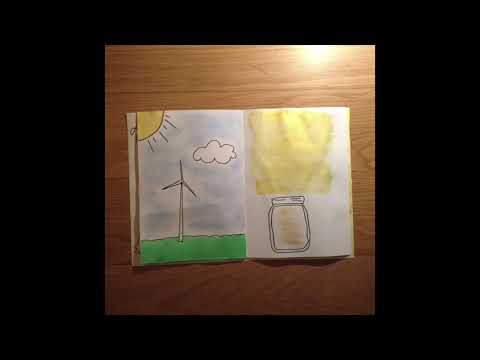
By 2050 Europe’s population will change. The increase in life expectancy and the decline in fertility rates will make Europe more aged. By 2050, almost a third of Europeans will be 65 or older, compared to a fifth nowadays. The working population will be reduced and this impact will have to be attenuated by changes in pension systems: for example, align retirement age with life expectancy. Furthermore, the reduction in working population can compromise our ability to maintain the level of economic growth. Therefore, legal migration can help Europe to deal with this problem. Another change in Europe will be the cities. Today more than 70% of European citizens live in the city and by 2050 they will be 80%. For this reason, it is necessary to adapt the cities! What’s the solution? Smart Cities. Some European cities have already begun to adopt this concept but there is still a long way to go. However, in 2050 it will be normal and all European cities will be. The increase use of automation, artificial intelligence, data-sharing, and sensors by businesses and authorities will improve the efficiency of public and commercial operations, ultimately leading to huge savings. In addition, smart cities will permit the sharing of government performance data, which will increase the transparency and, consequently create a closer relationship between citizens and the government, increase civic engagement and trust in city officials. Smart technologies will enable the creation of water management systems, mobility management tools, and smart energy grids, to improve the efficiency of city operations and services, reducing energy and water consumption, cutting down traffic and congestion, and improving waste management. The use of vehicles will be very restricted in the city centers and there will be a great development in collective transportation. People will save a large number of hours, from reductions in traffic and congestion. Smart cities will fight back to reduce negative effects in the environment. Smart Cities will have a circular economy where nothing is wasted and the resources are managed in a sustainable way and biodiversity is protected. Another change in Europe will be the way people live life. In my opinion, people will be so tired of daily routine, new technologies and everything that seems artificial that they will want to step aside and enjoy the moments. They will look for something that fills the emptiness. And what is the Solution? Culture. People will want to visit new places, meet new people, appreciate the beauty of small things, see pieces of art, listen to good music, go to the movies and just walk around without worry about anything. By 2050, Europe will have a great cultural diversity, so it is important to foster the sharing of experiences and to focus on multiculturalism to create a common identity. The culture will serve to unite all the European countries and all the citizens. We have the key to the future in our hands. It is up to us to do more and better.
Young Europe Imagines – by Marilena Zigka

When I first encountered the topic of “Imagining Europe in 2050” the first thing that crossed my mind was that oh wow, I have not even existed as a person for 31 years. It currently seems to me like an entire lifetime, and let’s face it, there’s so much potential, opportunity, dreams we can accomplish. But then, 31 years seems so little. Is it enough? Are we enough to put an end to this cyclone of problems?

Fake news and post truth politics… George Orwell had claimed that “political language is designed to make lies sound truthful and murder respectable, and to give an appearance of solidity to pure wind”. Do we actually solidify pure wind? If not how do we explain the rising threat of extremism, xenophobia and populism across the Union?

Dear 2050 vision, I hope you come fast. Because:

I envision a European Union which invests in humanities in its educational system, so that future citizens cultivate critical thinking, and empathy, so they can distinguish between valid and illegimate news, and do not promote hatred and antagonism. I envision a European Union which has media fact checkers preventing the dissemination of inaccurate information I envision a European Union were the freedom of expression is capitalized to its fullest and all constituent pieces of the EU mosaic can present their views without censorship or violent criticism. I envision a European Union where diversity and inclusion are fostered through inter European cultural exchange programs, more history and art in school, the integration of refugees into local classrooms and peer mentoring among students

Environmental pollution, emanating from CO2 emmissions and immense plastic deposition in our ecosystems, is one of the most severe issues that we face as a Union. Biodiversity is in peril, as animal populations and the flaura are debilitated.

Dear 2050 vision, do you even exist? Will 2050 exist? I envision an EU investing in innovation and technology, so that pioneers can develop novel applications which will help alleviate the strain on the natural world I envision an EU where a model of circular economy has dominated, in which single used materials have been eliminated, and all of our items enter a cycle of usage, modification and then re-usage as a new object. I envision an EU where environmental sustainability and economy are not mutually exclusive, but complement each other

31 years. This is it. The future. My advice for the EU is to invest in its tangible future: children.

Kids who envision a better tomorrow. Kids who embrace diversity and dialogue. Kids who defy absolutism and fear, Kids who promote diversity.

Kids who imagine a green planet.

The United States of Europe – by Radu Dumitrescu

My vision for Europe in 2050 is essentially a federalist one, meaning that the 28 states that make up the Union today will, by then, be fully integrated into a federal or federation-like supra-structure like the United States of Europe. There are very few areas that won’t be touched by this change. Already, the EU has improved and altered so many facets of our lives. We can freely travel and reside anywhere in the Union, and that will remain the basis of the EU in 2050, except the divides between one country and another won’t be as visible. You will have Frenchmen serving as mayors in Romania, Polish students following courses in Polish in Germany, Hungarian lawyers representing Spanish defendants before a Belgian court, Greek food served everywhere, Danish businessmen kicking-off their companies in Estonia, Irish artists taking over the Western Balkans and Italian wines being grown in Slovenia. The Europe of the future won’t be one of borders or fences, but one of mutual recognition and amalgamation. That includes the North-African and Middle-Eastern migrants that will come to supplant an aging population, revitalizing and becoming part of the nation of Europe. Already, the EU has improved democratic standards and the rule of law in Eastern Europe by holding each state to a higher standard. By 2050, this region, for long seen as the outskirts of Europe, will shed its communist past and be populated primarily by people who were born in the EU, as opposed to those who first saw the light of day behind the Iron Curtain. This change in mentality will prompt more transparency, more participation, good governance and entrepreneurship in the region. Living in the United States of Europe will seem as natural to them as it is for those born in Iowa to be part of the United States of America. It is from young Eastern Europeans that the EU will find its next leaders. Internationally, the EU will become a beacon of liberal democracy and free trade, holding up the two-state solution in Israel and Palestine and keeping Iran denuclearized. The United States will remain the closest ally of the New Europe, but its say will be limited, and NATO will slowly fade away, replaced by a European Army. Ever since it was founded and at every step of the way, the European Union was faced with challenges and crises. But it did not dismantle. It did not fail. It did not recede into theory. Instead, it was made real by everyday Europeans. That is how we made it until 2019 and that’s how we’ll progress up to and beyond 2050.

Imagine Europe! Pitch by Bánk Kostya

by Bánk Kostya

EUROPE in 2050

Hi! I think the world, just like Europe, has already made every mistake which is possible to make. The main challenge we are facing in the next 30 years, is to see whether we will be able to learn from these problems and whether the new generation will be able to reform the most important issues which are causing most of the problems today. These are, for example, agricultural issues: will we be able by 2050 to completely eliminate the use of chemicals? Will we be able to protect our bird species? And will we be able to stop the proliferation of insect species causing enormous damage? I trust that we will be able to find adequate solutions to the question of how to integrate robotics into our everyday lives. By 2050, I think we will be able to abandon manual work, which robots will have taken over from us, so that we will have much more time for cultural and artistic activities as well as self-development. It would also be high time to reform education. We see that Finland and Japan have already come up with amazing new and promising methods. By 2050, we will have needed to abandon our orthodox educational methods and our school desks. Our educational practices will then rely much more on practical experiences and creativity. Interestingly enough, I think that by 2050, aviation will be even more developed and electric as well as other alternative-powered cars will dominate. I am very confident that Europe will have been able to preserve its nation states by 2050. I am also confident that Europe will not have been washed away and that our culture of diversity, which is present here in Europe, will continue to thrive. I try to look into the future with optimism, even though this might be difficult at this moment, but I believe in the new growing generation and I really hope that this new generation will learn from the mistakes made by our ancestors and ourselves, so that we will be able to lead Europe into a better future for all of us.

Imagine Europe! Pitch by Hassna Debboun

by Hassna Debboun

My vision of EUROPE in 2050

In 2019, Europe is in a state worth worrying about because our protector, democracy, is in danger. Indeed, many people around the world are victims of social inequalities and many injustices. I invite you to go back in time, and very precisely back to 1948, when the Declaration of Human Rights was adopted in Paris by the General Assembly of the United Nations to affirm loud and clear: “Never again!” following the atrocities experienced during World War II. Today, these human rights are unfortunately violated while they are our guarantee of peace. The urgency to act in order to protect human dignity and to avoid a war is great. Without respect for these fundamental rights, history will repeat itself again and again. Despite this gloomy observation, I am convinced that every problem has its solution. I believe in the goodness of humans, in our capacity to question ourselves and overcome our difficulties. Change must come from within each of us. We all have the power to contribute to a better world. Each person is important and is part of the puzzle of democracy. My vision of Europe in 2050 is full of hope in a lively democracy from which every citizen can benefit. I imagine this democracy at the service of its people. The 16th President of the United States, Abraham Lincoln, stressed this. I quote his statement: “Democracy is the government of the people, by the people, for the people”. I imagine a Europe strong in its kindness towards all its citizens by respecting the Declaration of Human Rights. I dream of a Europe where the human individual is at the centre of all concerns. By creating a universal income that enables all people to live in a dignified manner, by offering quality education, by awarding rewarding salaries to increase purchasing power, by granting decent employment to all. By promoting access to decent housing at a reasonable price to protect people from the streets. By making health care accessible to all. By preserving the health of its citizens. By offering information that is fair and accessible to everyone. And especially by giving back a real power to the people, inviting them to participate in political decisions, by promoting a fair collaboration between political decision-makers and citizens. Democracy is the sole guarantor of dignity and freedom. What’s more important in life than these two precious values? I believe in a Europe representing all its citizens, giving everyone a fair place in it. I believe in a Europe which carries the face and colours of all its citizens. This vision of a democratic Europe can become real if we dare to create it all together, today. As Abraham Lincoln said, “The best way to predict the future is to create it.” So let’s work together to turn this idea of a possible Europe into a dignified and realistic one!