Latest videos

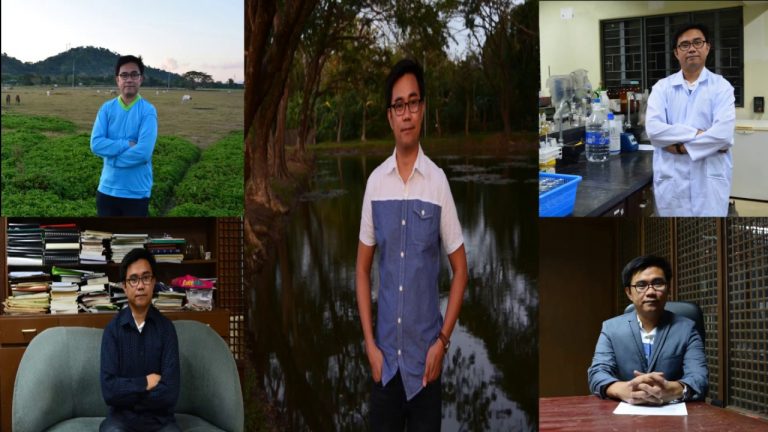
My vision of Europe in 2050 – by Eric Jhon Cruz

My vision of Europe in 2050 is the collective vision which I came up with by looking at it from a multi-disciplinary perspective from the four main sectors which I believe would be key players for the fate of Europe in 2050: the farming sector, the research sector, the business sector, and the government sector, primarily the policymakers.

From the farmer’s perspective, my vision of Europe in 2050 is on the use of modern techniques or available technologies for precision farming or precision agriculture. This includes the use of drones in the wide implementation and use of crop protection substances and fertilizer applications. There will be new varieties of crops that will be release which are more high yielding, climate-resilient, and more nutritious. Food security and food safety will be attained without compromising environmental protection using sustainable techniques.

From the researcher’s point of view, my vision of Europe in 2050 is a cutting edge, research-driven Europe that will lead the innovations in multi-disciplinary fields through transnational collaborations. There will be enough funding for research both in the physical sciences and social sciences. There will be new products, discoveries, ways of thinking, and other things that would be born out of research and that would be the norm in 2050. But for this to happen, there should be heavy investment in terms of education and support for researchers and the youth and the students so that they’ll be motivated to take this career path.

From the business sector’s point of view, my vision of Europe in 2050 is an economic-driven Europe that is fully compliant to social corporate responsibility and environmental protection. There will be tons of start-ups and small and medium enterprises that will provide jobs for everybody, regardless of race, religion, and political affiliation. The economy of Europe in 2050 will reach an all time high that has never been before seen in the history of Europe.

From the policymaker’s point of view, my vision of Europe in 2050 is that there will be more policies which are science-based, and everybody will be a part in crafting these policies. There will be social reforms so that everybody will be included in the so called inclusive growth. There will also be strengthening and reform of existing policies to particularly address the needs of the citizens.

In conclusion, I think that this vision will become a reality if we are all going to sit down together and work hand-in-hand for the realization of this vision not only for 2050, but in the years to come. Thank you very much for listening.


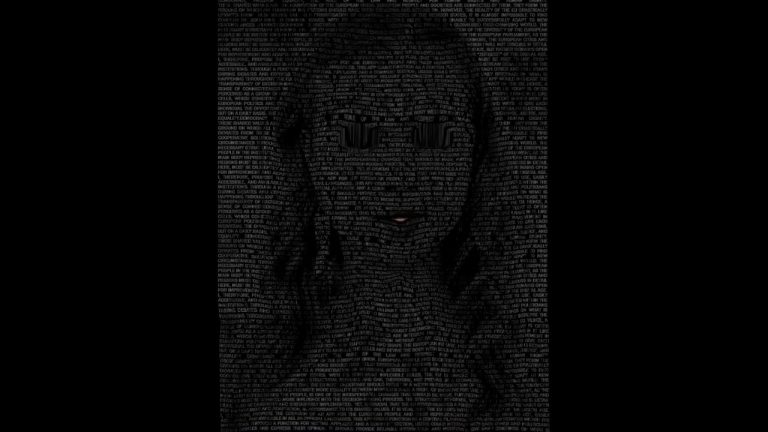
E-Europe – by Hannah Horschke

Democracy, freedom, equality, the rule of the law and respect for human rights and dignity. These shared values are the foundation of the European Union. European people and societies are connected by them. They form the ground, which all European Institutions should base their decisions and actions on. However, the reality of the EU drastically deviates from these ideals. Due to a prioritisation of individual interests of the member states, it is almost impossible to find cooperative solutions to common issues. With its somewhat inflexible rules, the EU is unable to successfully adapt to new circumstances through significant structural reforms and can, therefore, not prevail in a globalised ever-changing world.

The necessary structural reforms that the EU must undertake should result in a wider representation of the diversity of the European people in the institutions and promote more equality amongst member states. A right of initiative for the European Parliament, as the main body representing the people, is one of the indispensable changes that should be made. Furthermore, the European cities and regions must be granted more influence into the decision-making process. The structural reforms, which I will not discuss in detail here, must be diligently and sustainably implemented. Yet, is crucial that the EU never reaches a finite state, but rather remains open for improvement and adaptation, in accordance to its shared values.

It is vital that the EU goes with the “Zeitgeist” of the digital age. I therefore propose the creation of an App for the European people and their representatives. It must be free to use, easily accessible, and available in all 24 official languages. This App could function as a central platform to live-stream debates within the institutions. Through a function for virtual applause and a comment section, users could interact with each other and politicians during the debates and express their opinion. It should provide reliable information and moreover give daily briefings on what is happening throughout the EU. Furthermore, it could be used to mobilise support for citizens’ initiatives. The App would increase the transparency of decision-making processes, promote a transnational dialogue, and strengthen the legitimacy of the EU. Hence, a sense of connectedness with the European Union – its people, institutions and values- could be fostered.

Democracy, freedom, equality, the rule of the law and respect for human rights and dignity. These shared values are the foundation of the European Union. European people and societies are connected by them. They form the ground, which all European Institutions should base their decisions and actions on. However, the reality of the EU drastically deviates from these ideals. Due to a prioritisation of individual interests of the member states, it is almost impossible to find cooperative solutions to common issues. With its somewhat inflexible rules, the EU is unable to successfully adapt to new circumstances through significant structural reforms and can, therefore, not prevail in a globalised ever-changing world.

The necessary structural reforms that the EU must undertake should result in a wider representation of the diversity of the European people in the institutions and promote more equality amongst member states. A right of initiative for the European Parliament, as the main body representing the people, is one of the indispensable changes that should be made. Furthermore, the European cities and regions must be granted more influence into the decision-making process. The structural reforms, which I will not discuss in detail here, must be diligently and sustainably implemented. Yet, is crucial that the EU never reaches a finite state, but rather remains open for improvement and adaptation, in accordance to its shared values.

It is vital that the EU goes with the “Zeitgeist” of the digital age. I therefore propose the creation of an App for the European people and their representatives. It must be free to use, easily accessible, and available in all 24 official languages. This App could function as a central platform to live-stream debates within the institutions. Through a function for virtual applause and a comment section, users could interact with each other and politicians during the debates and express their opinion. It should provide reliable information and moreover give daily briefings on what is happening throughout the EU. Furthermore, it could be used to mobilise support for citizens’ initiatives. The App would increase the transparency of decision-making processes, promote a transnational dialogue, and strengthen the legitimacy of the EU. Hence, a sense of connectedness with the European Union – its people, institutions and values- could be fostered.

The EU today is often perceived as a group of bureaucrats and technocrats that is continuously distancing itself from the actual people living in it. Like cells, which constitute a body, all citizens living in member states are integral parts of the EU. Their persistent involvement in European politics and events is crucial, as a body cannot function without active cells. Hence, we must find ways to give each individual the opportunity to actively participate in EU-politics and shape the European future, not only through regular elections, but on a daily basis. The app is a possibility to animate the cells and revive the body with solidarity, pluralism, tolerance, justice, and equality.
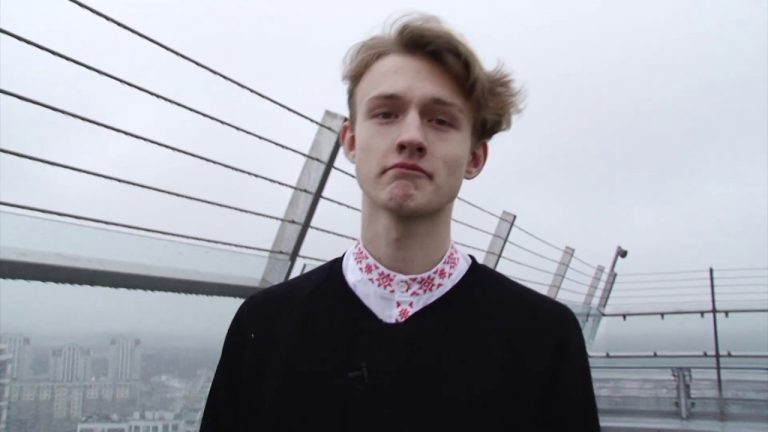
I May Seem Dreaming – by Miron Vitushka

How do you see Europe in 2050? Developed, prosperous – or, perhaps, weakened? And what if I tell you that Europe is much bigger than a lot of us think? Here are my thoughts on Europe in 2050. Miron Vitushka, 15 y.o., Minsk, Belarus.

Hello, my name is Miron Vitushka, I’m 15 years old, and I may seem dreaming, but here’s how I see Europe in 2050. I’m from the city of Minsk, Belarus, which is located in geographical center of Europe. That may seem shocking to some of you, so let me explain it a little bit: Europe is much bigger than a lot of us think. Many of us Europeans have made their minds that European borders are borders of EU and where EU ends – there lies the end of Europe. And this very division is our first problem, because it leads to many arguments within us. Eastern Europe is often regarded with poverty, unstable political atmosphere and other unpleasant things. Some don’t even acknowledge it as a part of Europe. But it’s not separated in any way – it’s a historical, economic and geographical part of Europe. Invention of multistage rocket, first European constitution, many Nobel Prize winners – these are only a few examples of how Eastern Europeans contributed to European history. I may seem dreaming, but in Europe 2050 there will be no place for stereotypes of any Europeans about one another. In our bright future there can be no West and East – but only Europe as one. And when we do demolish stereotypes – how great our future will be! If we enjoy our European heritage together, as a family we will be able to deal with stereotypes to other nations and cultures. Because in order to be good at accepting guests family itself must be united. I dream about Europeans all together developing and enlarging this heritage, which started in Ancient Greece and through our history came to our main values: freedom and democracy, which are embraced all around the world. I dream about teams of scientists from every part of Europe unite for improvement of our lives and for taking our civilization to the next level. I dream about united teams of European astronauts stepping on Mars being proud to carry European flag as ambassadors of our values. But all of that will be able only if Europe-2050 is not an arguing political union, but a family. United family. And I may seem dreaming, but yes – unity IS a solution for migration crisis. Unity IS a solution for financial problems. Unity is a solution to any threats. Because we passed the times of wars between each other long ago. Unity is the answer. And unity does not necessarily mean unification – each of our countries has its own unique culture, and we can disagree on certain on certain issues and it is ok – each member of a family has his own position. But if someone threats our values we must act together. And I may seem dreaming, but all Europeans we consider great…were just dreamers. So let’s enjoy and protect our Mother Europe – the land of dreamers and progress. Because strength is in unity. And united we stand strong. Good luck to you! See you somewhere in Europe!

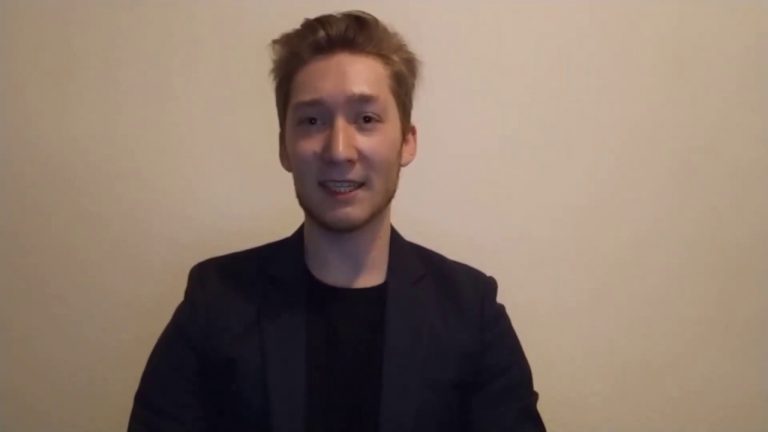
Re-establishing trust in political institutions through blockchain technology – by Pascal Haller

Modern technologies have made it easier for people to connect and it seems as if politics seems to be drifting further away from people rather than closer to them. That’s why I decided to frame my vision for Europe 2050 around the basic concept of trust: I would like to see a Europe where people can trust its political institutions. New technology, renewable energy, more Europeanisation or more integration, will not be worth much in themselves if we don’t pay attention to the basics. Democracy only works if people trust the processes of the system they live in. Without trust, we will see apathy, frustration, or so-called punitive participation, where citizens make active political decisions to showcase their frustration. As of now, trust levels and election turnout rates show alarming lows in many countries, with distrust levels ranging from more than 50% or more in many cases. I want to see a Europe where political participation by citizens is simple and continuous. General elections allow a one-time participation every 4 to 5 years, like a one-off “please tick the box and agree to being ruled” questionnaire. It says little about what people think about specific policies, or about post-election issues. Yet it may be the only touching point with politics for many. Other occasions such as local party events or discussion rounds often do not offer real inclusive platforms to participate. We need to fit political participation into a modern environment – it needs to be simple and straightforward, just like browsing the internet, it needs to be digital and accessible, and it needs to be continuous and let people express themselves on the topics that matter to them. I’m not going to suggest digitalising elections, but I propose local or national platforms where people can express their opinions on political topics -in the form of digital polls, votes or comments. This should be done systematically and continuously, it can be linked to existing local or national portals, it can be combined with information campaigns and thus give people a chance to speak where it matters for them locally: be it about the allocation of refugees, copyright on Google or housing subsidies. People need to be able to vote anonymously but results also need to be genuine. Here, blockchain technology could be used to secure voting, combining anonymity with security while also giving vital aggregated data to policy makers: how many citizens participated, regional attitudes and more. People want to participate in making decisions that impact them. Digitalising more aspects of concrete and active political deliberation could remove barriers to participation and trust. Imagine a Europe that uses connectivity to connect citizens and decision makers like never before, a Europe where citizens can actually trust the system.


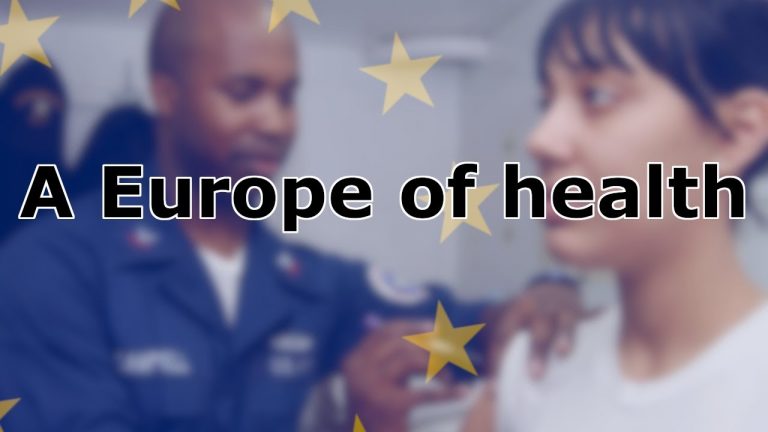
A Europe of health – by Enzo Gallet

Europe in 2019, will be a Europe of health, able to cure efficiently the various diseases that may affect our body and mind. Our goal: to become a leader in medicine, by adopting ambitious policies!